Dartmoor Pony
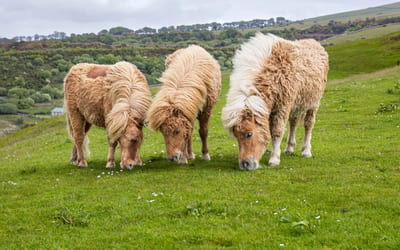
A small British native of up to 12.2hh from the Devon moors, with a kind head and a good…
The smallest of the four Welsh sections and the classic British first pony: hardy, cheap to keep, long-lived and clever enough to be a handful. Under 12.2hh, so a child outgrows one long before it is old.

We do not have enough Welsh Section A adverts yet to publish a price range from our own data. The figures in the price section below are an editorial estimate.
Scores are editorial, and describe the breed in general. Individual animals vary, and how a dog is bred and raised matters more than its breed.
Ask to see the certificates, with the parents' registered names on them. "Parents health tested" in an advert means nothing on its own.
A Welsh Mountain Pony: the smallest of the four sections in the Welsh Pony and Cob Society stud book, not exceeding 12 hands (122cm) at the withers. Small head, dished face, big eye, high-set tail, and a way of moving that looks like it costs no effort at all.
They are the pony most British children learn on, and they are also the pony most often sold badly. A well-produced Section A is a superb first ride. An unhandled three-year-old off a hill is a completely different animal, and the adverts do not always distinguish.
Native to the Welsh hills since before the Romans, and shaped far more by the weather than by any breeder. They survived on poor grazing in bad conditions, which is exactly why they founder on a well-fertilised paddock in Surrey. Henry VIII ordered the destruction of stallions under 15 hands in 1535; the Welsh ponies survived because the ground they lived on was too rough to search. The stud book opened in 1901.
Up to 122cm. A concave "dished" profile, small pricked ears, large widely-set eyes, a short back and strong quarters. Any solid colour is permitted - grey, bay, chestnut, black, dun, cream, roan
Bold, curious and quick. They are not placid the way a Shetland is placid; they are alert and they notice everything. A Section A that has been handled properly is honest and forward. One that has learned it can win an argument will keep winning it, and small ponies teach small riders.
Very intelligent, and that cuts both ways. They learn a new task in a handful of repetitions and they learn evasions just as quickly - napping, snatching at grass, running out at a fence. They need consistent handling from someone competent, which for most families means an adult who rides or a good instructor, not a child alone.
The classic children's pony, with the caveat above: match the pony's education to the child's, not the pony's height to the child's. A six-year-old needs a schoolmaster in its teens, not a five-year-old that is technically the right size. They live happily with other horses and are generally sensible around farm dogs.
Hardy, but the hardiness is the problem in a UK field. The dominant issues are metabolic:
Laminitis. The single biggest risk. Native ponies evolved on sparse hill grazing and are very efficient; put one on spring pasture and it will get fat and its feet will pay for it. Most need a track system, a grazing muzzle, or strictly limited turnout.
Equine Metabolic Syndrome and PPID (Cushing's). Common in natives, and often first noticed as recurrent laminitis. Testable with a blood sample.
Sweet itch. Allergic reaction to midge bites; miserable, seasonal, and manageable with rugs but never cured.
Dental problems in old age. They live long enough for their teeth to run out.
Daily checks year round: water, fencing, feet, and a hands-on look for injuries. Feet picked out daily, farrier every six to eight weeks, worm-count testing four times a year, teeth annually, vaccinations annually. Most live out with a field shelter and come in only for weather or work. Budget an hour a day, more in winter.
A thick double coat in winter that sheds heavily in spring. Do not clip a pony living out unless you are prepared to rug it properly. Manes and tails are traditionally left long and unpulled for showing. Mud fever and rain scald are the routine winter jobs.
Moderate but genuinely necessary - both for the pony's mind and to keep the weight off. Ridden work three or four times a week suits most, and they do everything: lead rein, showing, pony club, driving, and small jumping courses well above what their size suggests.
Less than you think. Most Section As need no hard feed at all beyond a vitamin and mineral balancer, plus hay in winter. Soaked hay if weight is a problem. Overfeeding is the commonest mistake made with this breed and it is not a kindness.
Expect £1,000-£3,500 for a sound, handled pony, and £4,000-£10,000+ for a proven show or pony club animal with a record. An unhandled or unregistered youngster may be £500 or less, and that gap is where most of the bad outcomes are.
The purchase is the small number. Keeping a pony costs roughly £2,500-£6,000 a year at DIY livery, more on part or full livery: grazing, hay, farrier, dentist, worming, vaccinations, insurance and the vet bill you did not plan for.
Ask for the passport at the first viewing, and check that the microchip in the pony matches it - this is a legal requirement, and a missing passport is a hard stop, not an admin detail.
Ride it, and have the person who will actually be riding it ride it too. See it caught from the field, not tacked up and waiting. Ask why it is for sale and ask the previous owner if you can.
Get a five-stage pre-purchase vetting from a vet you instructed, never the seller's. It costs £250-£450 and it is the cheapest part of this whole exercise. Ask specifically about laminitis history and look at the feet for the growth rings that follow a founder.
No Welsh Section As are advertised at the moment. Save this search and an email goes out when one is listed.
A shortlist rarely has one name on it. These sit closest to the Welsh Section A on size, coat and temperament, and each one has a full guide.
Going to see a Welsh Section A? Take the horse and pony checklist with you. It is the questions worth asking while you are stood in somebody's kitchen, rather than on the drive home.