Welsh Section C
The Welsh Pony of Cob Type: cob substance on a pony frame, under 13.2hh. Strong enough for…
The largest and strongest of the British native ponies, from the Scottish Highlands and islands. Immensely hardy, capable of carrying a full-grown adult all day, and among the most economical horses to keep in Britain.

We do not have enough Highland Pony adverts yet to publish a price range from our own data. The figures in the price section below are an editorial estimate.
Scores are editorial, and describe the breed in general. Individual animals vary, and how a dog is bred and raised matters more than its breed.
Ask to see the certificates, with the parents' registered names on them. "Parents health tested" in an advert means nothing on its own.
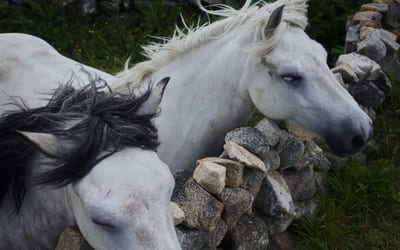
The largest of the nine British native breeds, 132-148cm, from the Scottish Highlands and the Western Isles. Deep-bodied, strong-limbed and immensely powerful for the height, with a full mane and tail and silky feather at the heel.
They were bred to carry a stag off a hill, which is a useful thing to know about their strength.
Native to Scotland since prehistory, with Arab and Spanish blood added over centuries through trade and shipwreck, and Clydesdale and Fell influence more recently. They were the crofter's general-purpose animal: ploughing, carting, carrying peat and timber, and bringing deer off the hill.
The mainland type is larger; the island type, from the Western Isles, is smaller and finer. The Highland Pony Society maintains the stud book and the RBST lists the breed.
132-148cm, 400-550kg. Deep through the girth with a strong back, powerful quarters and good flat bone. A kind, broad head with a wide forehead.
Dun in several shades - mouse, yellow, grey and cream - plus grey, bay, black and liver chestnut with a silver mane and tail. Many carry a dorsal eel stripe and zebra markings on the legs. No piebald or skewbald.
Steady, sensible and unflappable, with real presence. Highlands are calm in traffic, on a hill and around noise, and they are used for trekking centres precisely because they carry inexperienced riders safely.
They are also strong-minded, in the way of a breed that has made decisions on a mountainside for centuries, and they will take advantage of inconsistent handling.
Clever, willing and quick to learn, and they hold their training well. They drive, they jump, they do dressage adequately, and they are exceptional trekking and hunting ponies.
They mature slowly and should not be worked hard until four or five.
A genuine family pony: big enough for an adult, steady enough for a child. That combination is unusual and is the main reason people buy them.
Live out in herds and are entirely sensible around dogs, machinery and livestock.
Very sound, and that is the breed's reputation.
Laminitis. The dominant risk and the whole management problem. A Highland is adapted to survive a Scottish winter on heather and rough grazing, and improved pasture is dangerously rich. Restricted turnout, a track system or a muzzle for most, all year.
Equine Metabolic Syndrome and PPID, common in natives and often first seen as laminitis.
Sweet itch, seasonal and manageable.
Mud fever in the feather through a wet winter.
Otherwise hard feet, good legs, sound constitution and twenty-five to thirty-five years.
Daily checks, feet out daily, farrier every six to eight weeks - many stay barefoot and sound - teeth annually, vaccinations annually, worm counts through the season.
Condition-scored fortnightly. Under a Highland's winter coat you will not see weight gain until it is substantial.
A dense double winter coat that sheds enormously in spring, plus mane, tail and feather. The coat is weatherproof and they are healthier unrugged and unclipped unless in hard work.
Feather checked and dried through winter for mud fever.
Moderate, and more important for weight than for the pony's contentment. Three to five sessions a week of riding, trekking or driving. They have excellent stamina and carry weight easily.
Almost nothing beyond forage. Soaked hay in winter and a vitamin and mineral balancer. No hard feed unless in serious work or advised by a vet. Grazing is what needs managing.
£2,500-£7,000 for a sound, schooled pony; £8,000-£18,000 for a proven show or performance animal. Registered pedigree stock costs more.
Keeping one costs £2,500-£5,500 a year, and less than most horses if you have bare grazing.
Ask whether the pony is registered with the Highland Pony Society and see the papers. The breed is on the RBST watchlist and registration is what sustains it.
Passport and microchip at the first viewing.
Ride it, and have whoever will ride it ride it. See it caught from the field.
Five-stage vetting, and ask specifically about laminitis history. Look at the feet for divergent growth rings, because in this breed that is the thing most likely to have happened.
No Highland Ponys are advertised at the moment. Save this search and an email goes out when one is listed.
A shortlist rarely has one name on it. These sit closest to the Highland Pony on size, coat and temperament, and each one has a full guide.
Going to see a Highland Pony? Take the horse and pony checklist with you. It is the questions worth asking while you are stood in somebody's kitchen, rather than on the drive home.