Welsh Section A
The smallest of the four Welsh sections and the classic British first pony: hardy, cheap…
A small British native of up to 12.2hh from the Devon moors, with a kind head and a good riding shoulder. One of the best first ponies there is, and a Rare Breeds Survival Trust priority breed.
We do not have enough Dartmoor Pony adverts yet to publish a price range from our own data. The figures in the price section below are an editorial estimate.
Scores are editorial, and describe the breed in general. Individual animals vary, and how a dog is bred and raised matters more than its breed.
Ask to see the certificates, with the parents' registered names on them. "Parents health tested" in an advert means nothing on its own.
A British native not exceeding 12.2 hands (127cm), from the moors of Devon. Compact and strong with a small well-set head, a good sloping shoulder and a full mane and tail.
The riding shoulder is what distinguishes them: a Dartmoor moves like a small riding horse rather than like a stocky moorland pony, which is why they are so well thought of as first ponies.
Ponies have worked on Dartmoor since at least the 11th century, carrying tin from the mines and working the moorland farms. The stud book opened in 1899.
The breed suffered badly in the 20th century - wartime losses, crossbreeding with Shetlands for pit ponies - and the pedigree population is now small enough that the Rare Breeds Survival Trust lists them as a priority. The ponies running loose on Dartmoor today are largely not registered pedigree stock.
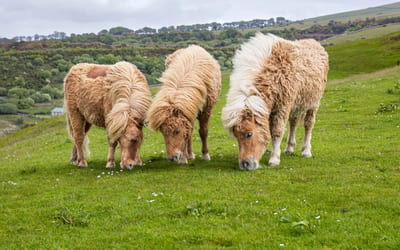
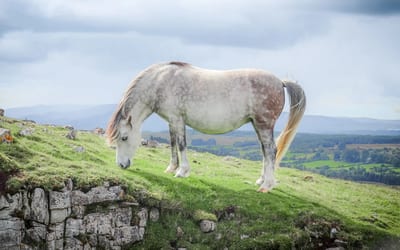
Up to 127cm, 200-320kg. Deep through the girth with good bone, a full mane and tail, and a characteristically kind eye. Bay, brown, black, grey, chestnut and roan; no piebald or skewbald.
Kind, sensible and honest, and that is the breed's whole reputation. Dartmoors are calm without being dull, and forgiving of a small rider's mistakes in a way that a sharper pony is not.
They are alert and quite capable of being clever, but the default temperament is genuinely good-natured.
Willing and quick to learn, and they hold their training. They do lead rein, first ridden, working hunter pony, pony club and driving, and they are good jumpers for the size.
Consistent handling matters, as with any clever pony, but they are less opinionated than a Welsh Section A.
One of the best first ponies in Britain. The combination of a kind temperament, a good riding shoulder and a manageable size is hard to beat.
As always, match the pony's education to the child's - a schoolmaster in its teens, not a green four-year-old.
Live out happily in company, sensible around dogs and farm traffic.
Hardy, with the usual native profile.
Laminitis, the main risk, from an efficient metabolism on rich grazing. Restricted turnout, a track system or a muzzle for most.
Equine Metabolic Syndrome and PPID, both blood-testable and often first spotted as recurrent laminitis.
Sweet itch, seasonal and manageable with rugs.
Dental problems in old age, because they live long enough for it.
Twenty-five to thirty years is normal.
Daily checks year round, feet out daily, farrier every six to eight weeks, teeth annually, vaccinations annually, worm counts four times a year. Most live out with a field shelter.
Condition-score fortnightly rather than judging by eye under a winter coat.
Thick winter coat, heavy spring moult. Manes and tails left long and unpulled for showing. Do not clip a pony living out unless you will rug it properly. Mud fever and rain scald in winter.
Moderate. Ridden work three or four times a week suits most, and they do lead rein, pony club, showing, jumping and driving. Exercise matters for weight as much as for the pony.
Almost nothing beyond forage. A vitamin and mineral balancer and hay in winter, soaked if weight is a problem. No hard feed unless a vet has said otherwise.
£1,500-£4,000 for a sound, handled pony, and £5,000-£12,000 for a proven show pony with a record. Registered pedigree stock costs more than moorland-bred.
Keeping one costs £2,500-£5,000 a year.
Ask whether the pony is registered with the Dartmoor Pony Society and ask to see the papers. A "Dartmoor" from the moor is often not a pedigree Dartmoor, and if you care about supporting the breed the registration is the thing that matters.
Passport and microchip at the first viewing.
Ride it, have the child ride it, see it caught from the field, and get a five-stage vetting. Ask about laminitis history and look at the feet for growth rings.
No Dartmoor Ponys are advertised at the moment. Save this search and an email goes out when one is listed.
A shortlist rarely has one name on it. These sit closest to the Dartmoor Pony on size, coat and temperament, and each one has a full guide.
Going to see a Dartmoor Pony? Take the horse and pony checklist with you. It is the questions worth asking while you are stood in somebody's kitchen, rather than on the drive home.