Highland Pony
The largest and strongest of the British native ponies, from the Scottish Highlands and…
Ireland's native pony and the best all-round performance pony in these islands: 13.2 to 14.2hh, sound, sensible, and capable of jumping far beyond its size. The pony an adult can ride and a teenager can compete.

We do not have enough Connemara adverts yet to publish a price range from our own data. The figures in the price section below are an editorial estimate.
Scores are editorial, and describe the breed in general. Individual animals vary, and how a dog is bred and raised matters more than its breed.
Ask to see the certificates, with the parents' registered names on them. "Parents health tested" in an advert means nothing on its own.
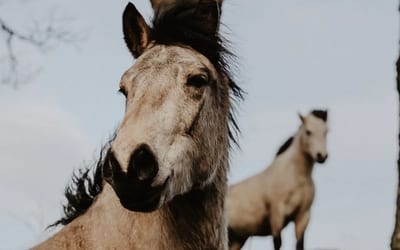
Ireland's only native pony breed, standing 128-148cm (roughly 12.2 to 14.2 hands). Compact, deep-bodied and athletic, with correct limbs and famously good feet. Predominantly grey, but bay, brown, dun, black, chestnut, palomino and roan all occur.
The Connemara occupies a space almost nothing else does: small enough to be a pony for a child in pony club, big enough for an adult to hunt all day. That range is why they hold their value.
Native to the west of Ireland, in Connemara - a landscape of rock, bog and Atlantic weather that selected hard for soundness and good feet. Local stock was improved over centuries by Spanish and Arabian blood, some of it romantically attributed to Armada wrecks and rather more of it to ordinary trade through Galway. The Connemara Pony Breeders' Society was founded in 1923.
128-148cm. A well-set neck, sloping shoulder, short back and strong quarters. The head is intelligent and slightly dished. Grey predominates and many are born dark and grey out with age, which surprises buyers of foals.
Sensible, honest and willing, with a genuine engagement in the job. They are not dull - a Connemara is forward and can be sharp - but they are famously level-headed in situations that would unsettle a hotter breed, which is why they hunt and event so well.
Highly trainable and quick to learn a course, a line or a routine. They think for themselves across country, which is exactly what you want going into a hedge and exactly what you do not want in a schooling session where you have not been clear. Consistency pays.
Excellent for a competent child or teenager, and a genuine adult ride. Not a lead-rein pony: too big and too forward for a first sit. They live out well in company and are generally easy in a mixed herd.
Sounder than most, which is the breed's selling point, but three things matter:
Hoof Wall Separation Disease (HWSD). A recessive genetic condition present in the Connemara population that causes the hoof wall to separate from the foot. There is a DNA test. Ask whether both parents were tested; two carriers should never be bred together.
Laminitis. Less prone than a Shetland but still a native pony on Irish and British grass.
Melanoma in greys. Common in grey horses of every breed as they age, and most Connemaras are grey. Usually slow-growing, occasionally serious. Look under the tail and around the sheath.
Standard for a working pony: daily checks, feet out daily, farrier every six weeks, annual dentist and vaccinations, worm counts through the season. Most live out in summer and come in at night through winter if they are in hard work.
A moderate coat, heavier if living out. Greys are a laundry problem and nothing more. Clipping is usual for a pony in winter work, with rugging to match. Feather is minimal, so mud fever is less of a battle than with a cob.
High. This is a performance pony and it is happier in work four to six days a week. They excel at eventing, working hunter, showjumping and hunting, and they hack out sensibly, which not every athletic pony does.
Forage first, always. In hard work they need conditioning feed and a balancer; out of work most hold weight on hay alone and will get fat if fed as though they were a warmblood. Adjust to the work, not to the season.
£3,000-£8,000 for a well-schooled all-rounder; £10,000-£25,000+ for a proven competition pony with a record or a registered mare with breeding. Unbroken three-year-olds start around £2,000-£4,000.
Annual keep runs £3,000-£8,000 depending on livery, and a competing pony costs more again in transport, entries and shoeing.
Ask for the passport, check the microchip, and ask whether the pony is registered with the Connemara Pony Breeders' Society - registration and pedigree materially affect resale.
Ask for the HWSD status of the pony or of both parents. A seller who does not know what you are asking about is telling you something.
Try it doing the job you want it for. A pony that schools beautifully in an arena may be a different animal in an open field, and the reverse is just as true. Get a five-stage vetting, and for anything you intend to compete, add radiographs of the hocks and front feet - £400-£800 more, and much cheaper than finding out at the first event.
No Connemaras are advertised at the moment. Save this search and an email goes out when one is listed.
A shortlist rarely has one name on it. These sit closest to the Connemara on size, coat and temperament, and each one has a full guide.
Going to see a Connemara? Take the horse and pony checklist with you. It is the questions worth asking while you are stood in somebody's kitchen, rather than on the drive home.