English Lop
The oldest domestic rabbit breed and the one with the longest ears of any animal, spanning…
A large lop of 4.5-6.8kg, heavy-boned and famously docile. Genuinely the size of a small dog, needing space and soft flooring to match, and shorter-lived than a small rabbit.
We do not have enough French Lop adverts yet to publish a price range from our own data. The figures in the price section below are an editorial estimate.
Scores are editorial, and describe the breed in general. Individual animals vary, and how a dog is bred and raised matters more than its breed.
Ask to see the certificates, with the parents' registered names on them. "Parents health tested" in an advert means nothing on its own.
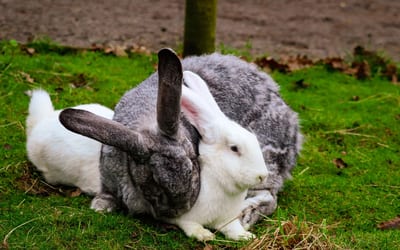
A large lop-eared rabbit of 4.5-6.8kg, sometimes more, with a massive head, heavy bone and thick ears hanging well below the jaw. They are the size of a small dog and need to be thought about that way.
Calm to the point of placidity, and one of the most rewarding rabbits to keep if you have the room.
Developed in France around 1850 by crossing the English Lop with the Flemish Giant, for meat. The result kept the Flemish Giant's size and bone with a shorter, heavier ear than the English Lop's.
They arrived in Britain in the 1930s and are now kept almost entirely as pets.
4.5-6.8kg and frequently more, 35-45cm. Thickset, broad and muscular with a short thick neck and a heavy head. Ears are thick and 30-38cm from tip to tip.
Short dense coat in solid and broken patterns, in most colours.
Famously docile. French Lops are placid, slow-moving and tolerant, and their size means they are rarely frightened by household activity. Many enjoy being with people and will sit beside you for long periods.
They are strong. A frightened 6kg rabbit kicking out can injure a person and can break its own spine doing it, so handling is a two-handed, close-to-the-body, low-to-the-ground job.
Bright and easily litter-trained. They learn routines and names, and their calm makes them easier to handle and train than a flightier small breed. They are also quite capable of opening an unlatched enclosure and strong enough to move furniture doing it.
Good with older children under supervision, and their tolerance is genuine. But a child cannot safely lift one and should not try - this is a rabbit interacted with on the floor, not carried.
Keep in a neutered pair, and a pair of French Lops needs a proportionately enormous space. Never with a guinea pig.
Sore hocks (pododermatitis). A heavy rabbit puts great pressure on a small area. Deep soft bedding throughout is not optional.
Arthritis and spinal problems, common with age and size, and a frequent reason for early euthanasia. A rabbit that cannot reach its own bottom to groom cannot stay clean, which brings flystrike into it.
Ear infections and dental disease, as with any lop.
Gut stasis, myxomatosis and RHDV1/RHDV2, flystrike, E. cuniculi - all as for any rabbit, with the added complication that anaesthetic risk is higher in giant breeds and rabbits need anaesthesia for routine dental work.
Five to eight years is the honest range.
A large amount of hay, water in a bowl rather than a bottle, litter cleaned daily, and a full-body check including feet and bottom. Nails every six weeks and they are substantial. Weight monitored.
Weekly brushing, more in a moult. Where they need help is reaching themselves: an older or arthritic French Lop needs its back end cleaned and checked daily.
The Rabbit Welfare Association minimum of 3m x 2m x 1m is for an average rabbit. A French Lop needs more - realistically a dedicated room, a converted shed with an attached run, or free run of a large secure indoor space. No commercial hutch sold in a pet shop is suitable.
85% hay, unlimited, and a lot of it - budget for a bale rather than a bag. Generous daily greens and a measured portion of single-component pellets scaled to body weight. No muesli.
£60-£150 from a breeder. Rescues have them regularly.
Setup is £600-£1,500 for genuinely adequate housing. Running costs £1,200-£2,000 a year for a pair. Vet fees are higher throughout because drug doses are by weight.
Be honest about space before anything else. If you would not have room for a medium dog, you do not have room for this rabbit.
Look at the hocks of every rabbit on the premises and ask what they are housed on. Check the ears and the front teeth.
Do not buy under eight weeks; ten is better for a large breed. Ask for the vaccination record, and know going in that five to eight years is the realistic span.
No French Lops are advertised at the moment. Save this search and an email goes out when one is listed.
A shortlist rarely has one name on it. These sit closest to the French Lop on size, coat and temperament, and each one has a full guide.
Going to see a French Lop? Take the rabbit checklist with you. It is the questions worth asking while you are stood in somebody's kitchen, rather than on the drive home.