Rex
A medium-large rabbit with a plush, upright velvet coat unlike any other breed. Calm,…
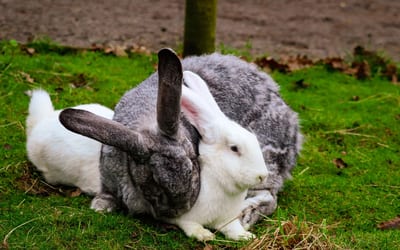
A large, calm, commercially bred rabbit of 4-5.4kg, most familiar as the white one with red eyes. Even-tempered and undemanding, and bred for the meat and laboratory trade rather than as a pet, which shapes what it needs.
We do not have enough New Zealand adverts yet to publish a price range from our own data. The figures in the price section below are an editorial estimate.
Scores are editorial, and describe the breed in general. Individual animals vary, and how a dog is bred and raised matters more than its breed.
Ask to see the certificates, with the parents' registered names on them. "Parents health tested" in an advert means nothing on its own.
A large commercial breed of 4-5.4kg, deep-bodied and well-muscled, most often seen as the pure white variety with pink eyes, though red, black and broken are also recognised.
They are American rather than New Zealand in origin, and they were developed for meat and fur. The white variety is also the rabbit most used in laboratories, which is worth knowing because it shapes where a lot of them come from.
Developed in California around 1916, probably from Belgian Hare and Flemish Giant stock. The red came first; the white appeared as a recessive and became the dominant commercial variety because white pelts dye easily.
Why "New Zealand" is unclear - the breed has no connection to the country.
4-5.4kg, 35-45cm. A deep, broad, well-rounded body with substantial hindquarters and upright ears. Short dense coat.
The white variety has pink or red eyes; the coloured varieties have brown.
Calm, steady and tolerant, which is partly why they were chosen for commercial work. They are not flighty, they handle well for their size, and they settle quickly in a household.
Socialisation varies more than in the fancy breeds, because many are bred in commercial rather than pet conditions. A New Zealand handled daily from birth is delightful; one raised in a bank of hutches and never touched takes months to come round.
Bright and easily litter-trained. They learn routines and respond to clicker work. Their calm makes them straightforward to handle, which is not true of every large rabbit.
Good with supervised older children - even-tempered and robust. Too heavy for a small child to lift, and handling should be at floor level.
Keep in a neutered pair with the space to match. Never with a guinea pig.
Few inherited problems, which is the benefit of a breed selected for productivity rather than appearance.
Sore hocks (pododermatitis). The main risk, from the weight. Deep soft bedding throughout, no wire, and weight kept in check.
Arthritis with age. Dental disease, gut stasis, myxomatosis and RHDV1/RHDV2, flystrike and E. cuniculi as for any rabbit.
The pink-eyed white variety is somewhat light-sensitive and should have shaded areas.
Five to eight years is typical, and well-kept pets often exceed it.
Plenty of hay, water in a bowl, litter cleaned, and a full-body check including feet and bottom - twice daily in warm weather. Nails every six weeks.
Weekly brushing, more in a moult. Nothing else. Never bathe.
More than the 3m x 2m x 1m minimum, given the size - a large run or a converted shed suits them. They are strong and enjoy space to move, though they are not as athletic as the smaller fancy breeds.
85% hay, unlimited, and a good deal of it. Daily greens and a measured portion of single-component pellets scaled to weight. No muesli.
Watch the weight. A breed selected to put on flesh efficiently does exactly that on a pet diet.
£30-£80 from a breeder; frequently free or nearly so from rescue, where they are common.
Setup £500-£1,000 for adequate housing. Running costs £900-£1,500 a year for a pair.
Ask how the rabbits are housed and how often they are handled - with this breed the socialisation matters more than any health test, because temperament varies with rearing.
Look at the hocks. Check the teeth and the back end.
Rescues have a great many New Zealands, often already neutered, vaccinated and bonded, and they are among the easiest large rabbits to live with. Start there.
No New Zealands are advertised at the moment. Save this search and an email goes out when one is listed.
A shortlist rarely has one name on it. These sit closest to the New Zealand on size, coat and temperament, and each one has a full guide.
Going to see a New Zealand? Take the rabbit checklist with you. It is the questions worth asking while you are stood in somebody's kitchen, rather than on the drive home.