Lionhead
A small rabbit with a distinctive woolly mane around the head. Friendly and popular - and…
The smallest common pet rabbit and the most misunderstood: a compact, alert, often quite bold little animal, bred so short in the face that dental disease is the breed-defining health problem.
We do not have enough Netherland Dwarf adverts yet to publish a price range from our own data. The figures in the price section below are an editorial estimate.
Scores are editorial, and describe the breed in general. Individual animals vary, and how a dog is bred and raised matters more than its breed.
Ask to see the certificates, with the parents' registered names on them. "Parents health tested" in an advert means nothing on its own.
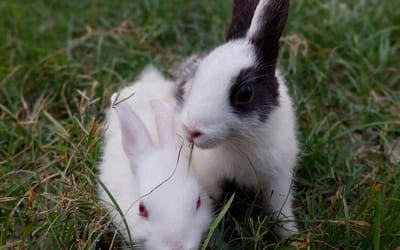
The smallest widely-kept rabbit breed, weighing 700g to 1.1kg fully grown. Short-bodied and compact, with a round head, very short ears - typically 5cm or less - and a short, dense coat. They come in a long list of recognised colours.
The dwarfing gene that makes them small is the same gene that shortens the skull, and that is the whole story of the breed's health. A rabbit's teeth grow continuously; a shortened jaw makes them much more likely to grow out of alignment.
Developed in the Netherlands in the early twentieth century by crossing small Polish rabbits with wild rabbits to introduce the dwarfing gene, then breeding back for temperament and colour. They reached Britain in the late 1940s and are now among the most commonly kept breeds in the country.
The early crosses were notoriously wild-tempered. Modern Netherland Dwarfs are not, but the reputation for being nippy persists and is usually about handling rather than breeding.
700g-1.1kg. A round, broad head with a short muzzle, small upright ears, and large eyes set well forward. The body is short and cobby. The eye and the skull shape are what give the breed its particular expression - and the same shape gives it its dental trouble.
More assertive than the placid lop breeds. A confident Netherland Dwarf is curious, busy and quite opinionated about being picked up. Handled gently and often from a young age they become affectionate and interactive; handled roughly or rarely they become defensive, and a frightened rabbit scratches and bites.
Rabbits are considerably brighter than their reputation. Netherland Dwarfs litter-train readily, learn their name, and can be clicker-trained to come, spin and go through tunnels. Training works on food and patience and not at all on correction.
Not the right rabbit for a small child, despite being the size that appeals to one. They are quick, they dislike being restrained, and a dropped rabbit breaks its back with distressing ease. Better as a family animal that children help care for and interact with at floor level.
They must be kept with another rabbit. A neutered pair is the standard: rabbits are a social species and a solitary rabbit is a welfare problem, not a preference. Never house one with a guinea pig.
Malocclusion. The breed problem. Misaligned incisors or molars mean teeth that never wear down, leading to spurs, mouth ulcers, abscesses and an inability to eat. Frequently needs burring under anaesthetic every few weeks or months for life. Check the front teeth before you buy, and be aware that molar problems are invisible without a vet's otoscope.
Gut stasis. A rabbit that stops eating and stops producing droppings is an emergency within hours. Usually secondary to pain, stress or a low-fibre diet.
Myxomatosis and Rabbit Haemorrhagic Disease (RHDV1 and RHDV2). Both usually fatal, both present in the UK wild population, both preventable by vaccination. Indoor rabbits are not safe: myxomatosis is carried by fleas and midges that come indoors.
Flystrike. In warm months, flies lay eggs on a soiled rabbit and the larvae eat into it. Check the back end twice daily from May to October.
E. cuniculi. A common parasite causing head tilt, hind limb weakness or kidney disease.
Fresh hay constantly, water checked twice daily, litter tray cleaned, and a hands-on check of the back end. Time out of the enclosure every day, and in summer a second bottom check each evening. Nails every six to eight weeks, vaccination annually, and a vet who actually treats rabbits - many small animal vets see very few.
Minimal. A weekly brush, more during a moult. They do not need bathing, and bathing a rabbit is genuinely dangerous - they panic, and wet rabbits go into shock.
Substantial, and this is where most setups fail. The Rabbit Welfare Association's minimum is a 3m x 2m x 1m enclosure available at all times, not a hutch with a run attached for an hour. They need to run, binky and stand fully upright on their back legs without touching the roof.
85% hay, unlimited, always - it wears the teeth and drives the gut. A handful of leafy greens daily, and a small measured portion of a single-component pellet, roughly an eggcup a day. Muesli mixes cause selective feeding and dental disease and should not be used at all. Carrots and fruit are occasional treats, not food.
£30-£80 from a general seller, £60-£150 from a breeder showing pedigree and health history, and rescue rabbits are usually £40-£70 for a neutered, vaccinated, bonded pair - which is the better deal by a distance.
Setup runs £300-£600 for an enclosure that meets the minimum. Ongoing costs are £600-£1,000 a year for a pair: hay, greens, pellets, litter, annual vaccination and insurance. Neutering is £80-£150 per rabbit. A single dental under anaesthetic is £150-£400 and may recur.
See the mother, and see her handled. A nervous, fear-aggressive doe usually produces nervous kits, and the way a breeder picks up their own rabbits tells you how these ones have been handled.
Check the front teeth yourself: the top incisors should sit just in front of the bottom ones. Any crossing, gapping or overgrowth is a hard no on this breed.
Do not buy a rabbit under eight weeks old. Ask for the vaccination record. Ask whether it has a bonded companion coming with it - buying a bonded pair is far easier than bonding two strangers later.
And consider a rescue first. Rabbits are the third most abandoned pet in Britain, and rescues rehome them already neutered, vaccinated and bonded.
No Netherland Dwarfs are advertised at the moment. Save this search and an email goes out when one is listed.
A shortlist rarely has one name on it. These sit closest to the Netherland Dwarf on size, coat and temperament, and each one has a full guide.
Going to see a Netherland Dwarf? Take the rabbit checklist with you. It is the questions worth asking while you are stood in somebody's kitchen, rather than on the drive home.