Rex
A medium-large rabbit with a plush, upright velvet coat unlike any other breed. Calm,…
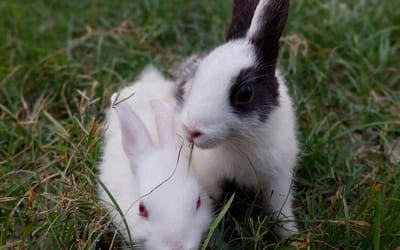
A Rex coat on a small frame: dense, short, upright velvet fur on a 1.4-2kg rabbit. Calm, exceptionally easy to groom, and needing soft flooring throughout because the same coat leaves very little padding on the feet.
We do not have enough Mini Rex adverts yet to publish a price range from our own data. The figures in the price section below are an editorial estimate.
Scores are editorial, and describe the breed in general. Individual animals vary, and how a dog is bred and raised matters more than its breed.
Ask to see the certificates, with the parents' registered names on them. "Parents health tested" in an advert means nothing on its own.
A small rabbit of 1.4-2kg carrying the rex gene, which shortens the guard hairs so they sit level with the undercoat. The result is a dense, upright coat about 1.3cm long that feels like crushed velvet and does not lie flat.
It is the smaller version of the standard Rex, and everything about the coat and the foot problem applies equally to both.
The rex mutation appeared in a litter in Louché-Pringé, France, in 1919 and was developed by the Abbé Gillet. The coat caused a sensation when shown in Paris in 1924 and the breed was originally kept for fur.
The Mini Rex was developed in the United States in the 1980s by crossing the standard Rex with Netherland Dwarfs, and reached Britain shortly after.
1.4-2kg, compact and well-muscled with upright ears and a rounded body. The coat is the point: short, dense, upright, and available in a long list of colours including castor, chinchilla, otter, black and blue.
Calm and confident, and often described as one of the more people-oriented small rabbits. They are curious rather than flighty and usually settle to handling quickly.
Like nearly all rabbits they dislike being picked up, which is different from disliking people.
Bright by rabbit standards. They litter-train quickly, learn names and routines, and take well to clicker training and to rabbit agility. Food-motivated and patient.
Good with supervised older children - calm, robust enough, and not prone to panic. Floor-level handling only.
Keep in a neutered pair. Never with a guinea pig.
Sore hocks (pododermatitis). The breed problem, and it follows directly from the coat: rex rabbits have far less fur on the soles of their feet than other breeds. On wire, hard flooring or damp bedding the skin over the hock ulcerates. It is painful, it recurs, and severe cases reach the bone.
Prevention is entirely about flooring - soft, dry, non-abrasive throughout, deep bedding in the resting areas, and keeping weight down.
Dental disease, less severe than in the true dwarfs but still present.
Gut stasis, the usual rabbit emergency. Myxomatosis and RHDV1/RHDV2 - vaccinate annually. Flystrike in summer. E. cuniculi.
Hay, water, litter tray, and a back-end check twice daily in warm weather. Check the feet weekly
Almost none, and over-brushing damages the coat. A rubber mitt or a hand-stroke once a week is enough. Never bathe.
The low shedding makes them a tidy rabbit to live with, though no rabbit is hypoallergenic.
3m x 2m x 1m minimum permanent space plus daily time in a larger area. Flooring matters more here than for any other breed: soft, dry and non-abrasive everywhere the rabbit goes.
85% hay, unlimited. Daily leafy greens and a measured eggcup of single-component pellets. No muesli. Keep the weight down - excess weight goes straight onto the hocks.
£40-£100, more for a good show-quality coat. Rescues rehome them at £50-£80 for a neutered vaccinated pair.
Setup £300-£600; running costs £600-£1,000 a year for a pair.
Look at the feet. Turn the rabbit over, or ask the breeder to, and examine both hocks. Thinning fur, pink skin or scabbing on a young rabbit means it has been kept on the wrong flooring, and the problem often follows the animal for life.
Ask what the parents and kits are housed on. If the answer involves wire, walk away.
Feel the coat: it should be dense and spring back upright, not lie flat or part to the skin. Check teeth and ears, do not buy under eight weeks, and ask for the vaccination record.
No Mini Rexes are advertised at the moment. Save this search and an email goes out when one is listed.
A shortlist rarely has one name on it. These sit closest to the Mini Rex on size, coat and temperament, and each one has a full guide.
Going to see a Mini Rex? Take the rabbit checklist with you. It is the questions worth asking while you are stood in somebody's kitchen, rather than on the drive home.