Cob
Not a breed but a type: short-legged, wide, heavy-boned and famously kind. The traditional…
The feathered, usually coloured cob bred by British and Irish Travelling communities. Famously kind and unflappable, heavily feathered, and sold in the least regulated corner of the equine market.
We do not have enough Gypsy Cob adverts yet to publish a price range from our own data. The figures in the price section below are an editorial estimate.
Scores are editorial, and describe the breed in general. Individual animals vary, and how a dog is bred and raised matters more than its breed.
Ask to see the certificates, with the parents' registered names on them. "Parents health tested" in an advert means nothing on its own.
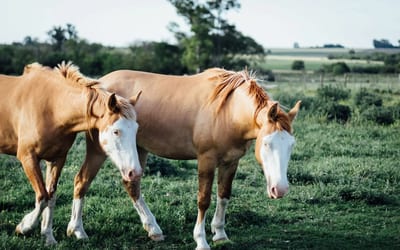
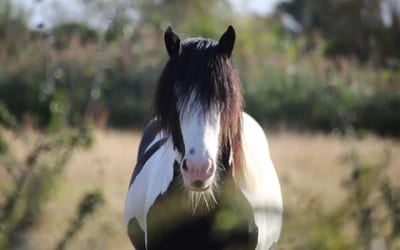
A short-legged, heavy-boned, heavily feathered cob of 132-155cm, usually piebald or skewbald, bred by Romani and Traveller families in Britain and Ireland to pull a wagon and be safe around children.
It is a type rather than a closed breed, though several societies now register them. The name tells you what the animal looks like and very little about what is behind it, which matters more here than in any other guide on this site.
Developed from the 19th century by British and Irish Travelling communities, from Shire, Clydesdale, Dales and Fell stock crossed for size, colour and temperament. The requirement was a horse that could pull a heavy wagon all day, live out, and be trusted around a family.
Formal registries - the Gypsy Cob Society, the Irish Cob Society and others - are recent, and registration is far from universal.
132-155cm, 400-650kg. Broad chest, short strong legs, abundant feather from knee and hock down, and a thick mane and tail that is often left to grow to the ground.
Piebald and skewbald predominate, though solids, blagdon and tobiano all occur.
The reason people buy them. A good Gypsy Cob is unflappable, willing and genuinely kind - the horse that carries a nervous returning rider back into the sport, or takes a child on their first hack.
They are unhurried rather than lazy, and they forgive a great deal.
Sensible and steady rather than quick. They learn thoroughly, retain what they learn and rarely invent problems. They can be strong, and a cob that has learned to lean on the bit takes real work to re-educate.
They drive exceptionally well, which is their original purpose.
Among the best types for a family, and often the safest ride on a yard. Easy in traffic when properly produced, easy in a herd, and untroubled by dogs and farm activity.
Too wide for most small children to sit comfortably across.
Laminitis and obesity. An extremely good doer on UK pasture. Restricted grazing, weight monitoring and a muzzle for most.
Mud fever and feather mites. The feather that makes the type beautiful traps wet and mud all winter and hosts Chorioptes mites. This is a recurring seasonal job, not a one-off, and many owners eventually clip the feather off, which solves it and costs the look.
PSSM1, a muscle glycogen storage disorder common in cob and draught populations, causing tying-up and reluctance to work. Simple DNA test, well worth doing on unknown breeding.
Sarcoids and sweet itch, both common.
Daily checks, feet out daily, and through winter a hands-on check of every heel and pastern under the feather. Farrier every six to eight weeks, teeth annually, vaccinations annually, worm counts through the year.
The feather is the work. Kept long it needs drying and checking constantly through a wet winter. Manes and tails are thick and grow enormously and need regular attention to avoid matting.
Moderate but essential for weight control. Three to five sessions a week of hacking, riding club work or driving. They are not built for speed or big fences and asking for either is how cobs get injured.
Very little hard feed. Soaked hay in winter, a vitamin and mineral balancer, and a realistic look at the grazing. This is the type most often killed with kindness.
£1,500-£5,000 for a sound, sensible riding cob with a passport and a history. £6,000-£20,000 for a proven show animal or an exceptional coloured horse. Below about £1,200 you are usually looking at an unbroken, unregistered or unpassported horse.
Keeping one costs £3,000-£7,000 a year.
This is the market where the buying advice matters most.
The passport is a legal requirement and a hard stop. Every horse in Great Britain must have an identification document and a microchip that matches it. No passport means you cannot legally move or sell the horse, and it usually means nobody can tell you its age or history either. Walk away.
Ride it away from home, in traffic if that is what you will be doing, and on a second visit. Ask to see it caught, shod, loaded and clipped.
Ask its age and then have the vet age it from its teeth at the vetting; a great many cobs are advertised younger than they are.
Get a five-stage vetting from your own vet, never the seller's. Ask them to check under the feather, look for laminitic rings, and take a blood sample. Add a PSSM1 test if the breeding is unknown.
No Gypsy Cobs are advertised at the moment. Save this search and an email goes out when one is listed.
A shortlist rarely has one name on it. These sit closest to the Gypsy Cob on size, coat and temperament, and each one has a full guide.
Going to see a Gypsy Cob? Take the horse and pony checklist with you. It is the questions worth asking while you are stood in somebody's kitchen, rather than on the drive home.