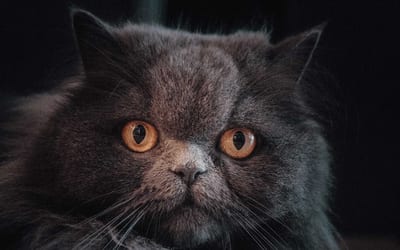
British Longhair
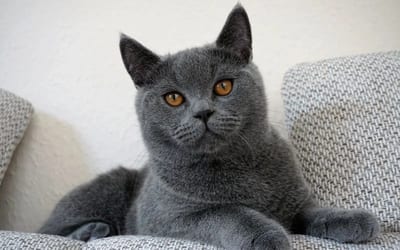
A British Shorthair in a long coat: the same round, placid, undemanding cat with more…
A large, heavy, extremely docile semi-longhair developed from the Ragdoll. Goes limp when picked up, tolerates almost anything, and needs an owner who will keep it off the furniture and off the food.

We do not have enough Ragamuffin adverts yet to publish a price range from our own data. The figures in the price section below are an editorial estimate.
Scores are editorial, and describe the breed in general. Individual animals vary, and how a dog is bred and raised matters more than its breed.
Ask to see the certificates, with the parents' registered names on them. "Parents health tested" in an advert means nothing on its own.
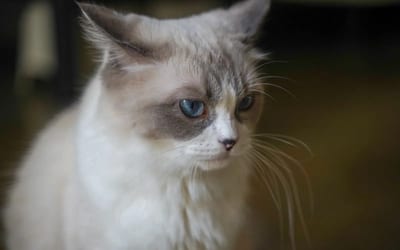
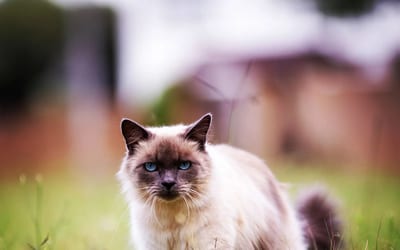
A large semi-longhaired cat of 4-9kg, closely related to the Ragdoll and sharing its defining trait: a tendency to relax completely when picked up. Broad chest, heavy boning, a sweet rounded face and large walnut-shaped eyes.
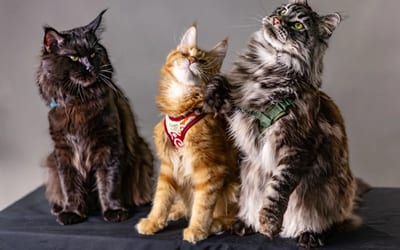
The difference from a Ragdoll is mainly colour. Ragdolls are pointed; Ragamuffins come in every colour and pattern, including solids and tabbies, and their eyes can be any colour rather than obligatorily blue.
The Ragamuffin split from the Ragdoll in 1994, when a group of breeders left the tightly controlled Ragdoll association to outcross to Persians, Himalayans and domestic longhairs. The aim was a wider gene pool and a broader colour range under a name they could register freely.
The name was chosen partly as a joke at the expense of the association they had left. The GCCF does not recognise them; they are registered with CFA and elsewhere.
25-30cm, 4-9kg, with males at the top end and notably heavy. Rectangular, broad-chested and substantial, with a fatty pad on the lower abdomen that is correct rather than a weight problem.
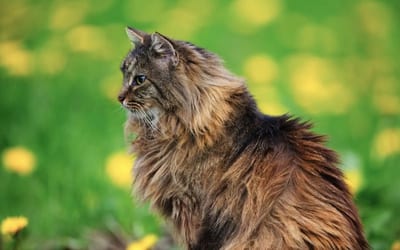
The coat is medium-long, dense and silky, with a ruff and a plumed tail. Every colour and pattern is permitted.
They mature slowly: full size and coat take four years.
Extremely docile. Ragamuffins are affectionate, people-following, and will happily be carried about by a child. They greet visitors, tolerate handling and rarely use their claws.
That docility is the breed's appeal and its main hazard: a cat with no self-preservation instinct is badly equipped for roads, dogs and people with bad intentions.
Moderately bright and biddable. Many learn to fetch and walk on a harness, and they respond well to gentle training. They are not problem-solvers and they are not busy, which suits most households.
One of the best breeds for a family with young children. They tolerate carrying, dressing up and general handling to a degree that few cats do, and their default response to too much is to go limper rather than to bite.
That tolerance needs protecting rather than exploiting - a cat that never objects can be hurt without anybody noticing.
Good with dogs and other cats.
Hypertrophic cardiomyopathy. The main concern, inherited through Ragdoll ancestry. There is a DNA test for the Ragdoll MYBPC3 mutation, and it should be done alongside echocardiogram screening - neither replaces the other.
Polycystic kidney disease, from the Persian outcrossing. DNA testable.
Obesity. A large, placid, indoor cat that likes food. Weight is the commonest health problem in the breed in practice and it drives diabetes and joint disease.
Bladder stones and hairballs both occur more than average.
Combing, measured food, play, and litter. Weigh monthly - the abdominal pad and the coat make weight gain very easy to miss.
Keep them in, or in a secure garden. This is not a cat that should be crossing roads.
Less work than the length suggests, because there is little woolly undercoat. Comb two or three times a week, more in spring, concentrating on the ruff, the armpits and the britches.
Nails need regular trimming; they are large cats and they do not always use a post enough.
Low to moderate and mostly your job to initiate. Wand toys twice a day, a sturdy climbing frame that will take a 9kg cat, and puzzle feeders to slow the eating down.
Measured meals rather than a full bowl. A large frame needs feeding properly while growing, which takes four years, and then needs feeding rather less once neutered and mature. Get the weight chart from your vet and use it.
£700-£1,500 from a registered breeder with cardiac and PKD screening. They are less common in Britain than Ragdolls, so expect to travel or to wait.
Insurance moderate. Budget for cardiac monitoring as the cat ages.
Ask for the Ragdoll HCM DNA result and the date of the parents' echocardiograms, and the PKD result. A breeder doing one but not the other is not covering the risk.
Be careful about what you are buying: Ragamuffin, Ragdoll and "Ragdoll cross" are used loosely, and a large fluffy moggy is sometimes sold as one. Ask for registration papers.
See the mother and pick her up. The limpness is heritable temperament and you can feel it.
No Ragamuffins are advertised at the moment. Save this search and an email goes out when one is listed.
A shortlist rarely has one name on it. These sit closest to the Ragamuffin on size, coat and temperament, and each one has a full guide.
Going to see a Ragamuffin? Take the kitten and cat checklist with you. It is the questions worth asking while you are stood in somebody's kitchen, rather than on the drive home.