Ragamuffin
A large, heavy, extremely docile semi-longhair developed from the Ragdoll. Goes limp when…
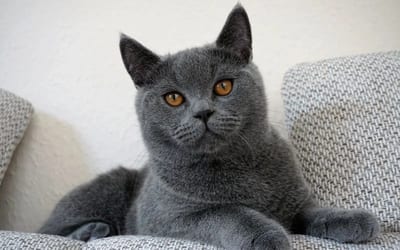
A British Shorthair in a long coat: the same round, placid, undemanding cat with more brushing. Calm, tolerant and content to be left to itself, and inclined to get fat if allowed.

We do not have enough British Longhair adverts yet to publish a price range from our own data. The figures in the price section below are an editorial estimate.
Scores are editorial, and describe the breed in general. Individual animals vary, and how a dog is bred and raised matters more than its breed.
Ask to see the certificates, with the parents' registered names on them. "Parents health tested" in an advert means nothing on its own.
A British Shorthair with a semi-long coat, arising from the Persian outcrosses used to rebuild the Shorthair after the World Wars. The recessive longhair gene stayed in the population, and cats carrying two copies produce a long-coated version of exactly the same cat.
The GCCF recognises them as a separate breed. Everything except the coat - the temperament, the build, the round face, the health profile - is British Shorthair.
The British Shorthair descends from the working cats of Roman Britain and was standardised by Harrison Weir in the 1870s. Both World Wars nearly finished the breed and it was rebuilt with Persian blood, which brought the longhair gene in.
For decades longhaired kittens were considered a fault and were quietly neutered and sold as pets. Formal recognition came later, and the breed is still less common than the Shorthair.
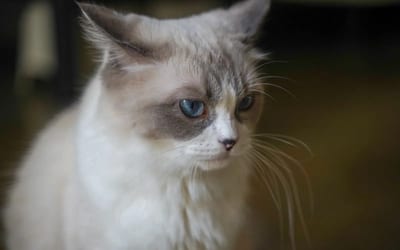
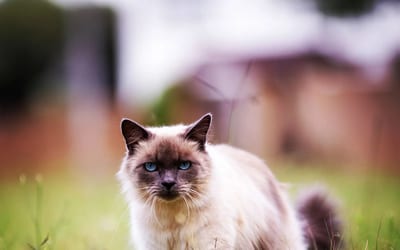
25-30cm, 4-8kg, males considerably heavier. Cobby, broad-chested and heavy-boned, with a round head, full cheeks, small rounded ears and large round eyes.
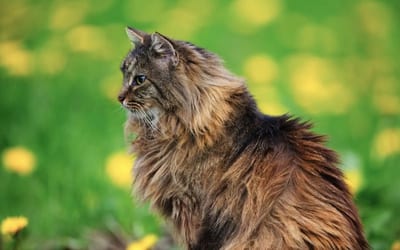
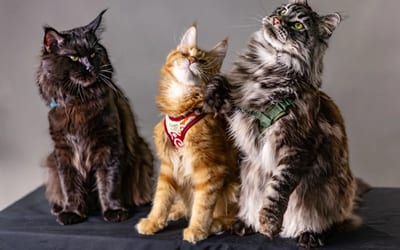
The coat is semi-long and dense with a substantial undercoat, plus a ruff and a plumed tail. Blue is the classic colour; the breed is also bred in cream, black, white, tabby, colourpoint and tortie.
Placid, steady and undemanding. British Longhairs are affectionate on their own terms - they will sit next to you for hours and object to being picked up. They are not lap cats and they are not clingy.
They are quiet, slow-moving and remarkably unbothered by household upheaval, which makes them one of the easier pedigrees to live with and a good choice for a busy or noisy home.
Reasonably bright and thoroughly unmotivated. They will learn where food comes from and little else, and they are not interested in tricks. Puzzle feeders work mainly because food is involved, which is useful given the weight problem.
Very good with both. Their tolerance is genuine and their reaction to being pestered is to walk away rather than scratch. They are big enough not to be fragile.
Fine with other cats and with cat-tolerant dogs.
Polycystic kidney disease, inherited from the Persian outcrossing. DNA testable, and there is no excuse for an untested line.
Hypertrophic cardiomyopathy, the commonest heart disease in cats, screened by echocardiogram rather than by listening. Ask for dates.
Haemophilia B, a bleeding disorder found in British lines, with a DNA test.
Obesity. The realistic day-to-day problem. This is a placid, food-motivated cat that does not exercise much, and a fat British Longhair is a common sight. Excess weight brings diabetes, joint disease and a shorter life, and it is entirely within the owner's control.
Blood type B is more frequent in British cats than most breeds, which matters for breeding and for transfusion.
Combing, measured food, and litter. Weigh monthly - under that much coat you cannot judge condition by eye, and by the time a British Longhair looks fat it is well past it.
Two or three thorough combings a week, to the skin, more during the spring moult when the undercoat comes out in quantity. The ruff, the armpits and the britches mat first.
They are not a high-maintenance longhair by Persian standards, but a fortnight of neglect produces mats that need cutting out.
Low, and that is the problem rather than a convenience. They will not exercise themselves. Wand toys twice a day, a climbing frame they can actually get up, and food in puzzle feeders rather than a bowl all help.
Measured portions, twice daily, of a good quality food. Do not free-feed. Use the weight chart from your vet rather than your own judgement, and act on a gain of 200g rather than waiting for a kilogram.
£600-£1,500 from a GCCF-registered breeder with PKD and HCM screening.
Running costs are modest. Insurance is cheap by pedigree standards.
Ask for the PKD DNA result and the date of the parents' heart scans. Ask the blood type of the queen if you may ever want to breed.
See the mother and judge her weight - a very heavy queen tells you about the household's feeding habits, which the kitten will have learned.
And make a plan for weight before you collect the kitten, because with this breed it is the single thing most likely to shorten its life.
No British Longhairs are advertised at the moment. Save this search and an email goes out when one is listed.
A shortlist rarely has one name on it. These sit closest to the British Longhair on size, coat and temperament, and each one has a full guide.
Going to see a British Longhair? Take the kitten and cat checklist with you. It is the questions worth asking while you are stood in somebody's kitchen, rather than on the drive home.