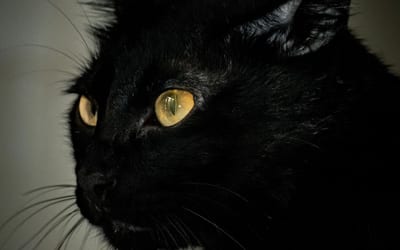
Bombay
A solid black shorthair with copper eyes and a patent-leather coat, bred to look like a…
A muscular, surprisingly heavy shorthair with a satin coat and an extrovert, dog-like character. Vocal, demanding of company, and carrying the highest diabetes risk of any cat breed.
We do not have enough Burmese adverts yet to publish a price range from our own data. The figures in the price section below are an editorial estimate.
Scores are editorial, and describe the breed in general. Individual animals vary, and how a dog is bred and raised matters more than its breed.
Ask to see the certificates, with the parents' registered names on them. "Parents health tested" in an advert means nothing on its own.
A medium shorthaired cat of 3.5-6kg, compact and unexpectedly heavy for its size - "a brick wrapped in silk" is the breed's own description and it is accurate. Short, close-lying satin coat, a rounded head and large expressive gold or yellow eyes.
British and American Burmese have diverged into two types: the European cat is more moderate in head shape, the American rounder and cobbier. The American type carries the head defect gene discussed below.
Every Burmese descends from one brown cat, Wong Mau, brought from Rangoon to San Francisco in 1930 by Dr Joseph Thompson. She was bred to a Siamese, and the brown kittens were bred back to her, which is how the breed was established from a single founder.
That narrow base is the reason for the specific inherited conditions the breed carries. Brown, or sable, was the only colour for decades; blue, chocolate, lilac, red, cream and tortie were developed in Britain from the 1950s.
25-30cm, 3.5-6kg, with males noticeably heavier. Muscular, with a straight back, rounded chest and slim legs. The coat is very short, glossy and close, with almost no undercoat, so it feels like satin and shows every bit of condition.
All colours are solid and shade slightly lighter on the underparts. Kittens are paler and darken over the first year.
Extrovert to a degree that surprises people who expect a cat to be aloof. Burmese involve themselves in everything, follow their people from room to room, sit on whatever is being read, greet visitors and expect to be picked up.
They are vocal - softer and huskier than a Siamese, but persistent, and they will hold a conversation. They stay playful into double figures.
They do not do well alone. A Burmese left for a full working day every day becomes depressed or destructive, and this is the single most important practicality of the breed. Many breeders will not sell a single kitten to a household that is out all day, and they are right not to.
Among the brightest cats. They learn names, tricks and routines, many will fetch, and a good number walk on a harness. Puzzle feeders and training sessions are not enrichment extras for a Burmese - they are how you keep one out of trouble.
Excellent with children. They are robust, tolerant, and actively seek out company, which makes them one of the better breeds for a family with a busy house.
Good with other cats - and a second cat is genuinely worth considering for this breed - and with dogs, which many Burmese simply treat as another playmate.
Diabetes mellitus. Burmese have several times the risk of other breeds, and it is higher again in Australian and British lines. Signs are drinking and urinating more, weight loss despite a good appetite, and lethargy. It is manageable with insulin and diet, and some cats go into remission if caught early, but it is a daily commitment for the rest of the cat's life.
Keeping a Burmese lean is the main thing an owner can do about it.
Hypokalaemia, an episodic muscle weakness from low blood potassium, showing as a wobbly gait and a head held low. There is a DNA test and both parents should be clear or the mating planned so no kitten is affected.
Burmese head defect, a lethal craniofacial deformity in the American contemporary type. DNA testable. Ask directly whether the line is tested and clear.
Feline orofacial pain syndrome, a distressing condition causing mouth pain and self-trauma, recognised particularly in this breed. Flat-chested kitten syndrome in neonates. Hypertrophic cardiomyopathy, as with most pedigrees.
Company, play, and a measured meal. Weigh monthly and act on gains - the diabetes risk means weight is not cosmetic in this breed. Watch water intake; a Burmese that starts emptying the bowl needs a glucose test, not a bigger bowl.
Minimal. A weekly stroke with a rubber mitt or a chamois keeps the satin coat gleaming and removes the little they shed. No undercoat means no matting.
Teeth brushed if possible - the breed is prone to gingivitis. Nails monthly.
High for a cat, and mostly your problem to solve. Wand toys twice a day, a tall climbing frame, puzzle feeders, and ideally another cat. A Burmese with nothing to do will find something, and it is usually your belongings.
Many are best kept indoors or with secure outdoor access, because they are trusting to the point of walking up to strangers and cars.
Measured, wet-led, and lean. Free feeding a Burmese is how you get a diabetic Burmese. Split the ration into two or three meals, use a puzzle feeder for part of it, and weigh the cat rather than judging by eye - a satin coat over a solid frame hides condition well.
£600-£1,200 from a GCCF-registered breeder with DNA tests done.
Insurance deserves thought here. Diabetes is a lifetime claim - insulin, syringes, glucose curves and regular bloods run to £600-£1,200 a year once diagnosed - so a lifetime policy taken out before any symptoms appear is worth the premium.
Ask for the hypokalaemia DNA result on both parents and, if the line has American contemporary blood, the head defect status. Both are simple cheek-swab tests and a serious breeder will have them.
Ask whether any cat in the line has been diabetic, and at what age. Breeders vary in how willingly they discuss it and the ones who answer straight are the ones to buy from.
Then be honest about your hours. This is a cat that needs company, and the kindest thing most buyers can do is take two.
No Burmeses are advertised at the moment. Save this search and an email goes out when one is listed.
A shortlist rarely has one name on it. These sit closest to the Burmese on size, coat and temperament, and each one has a full guide.
Going to see a Burmese? Take the kitten and cat checklist with you. It is the questions worth asking while you are stood in somebody's kitchen, rather than on the drive home.